Glympt
Technographic Lead Intelligence Platform
A technographic data platform that detects website technology stacks and turns domain scans into searchable, filterable prospecting datasets.
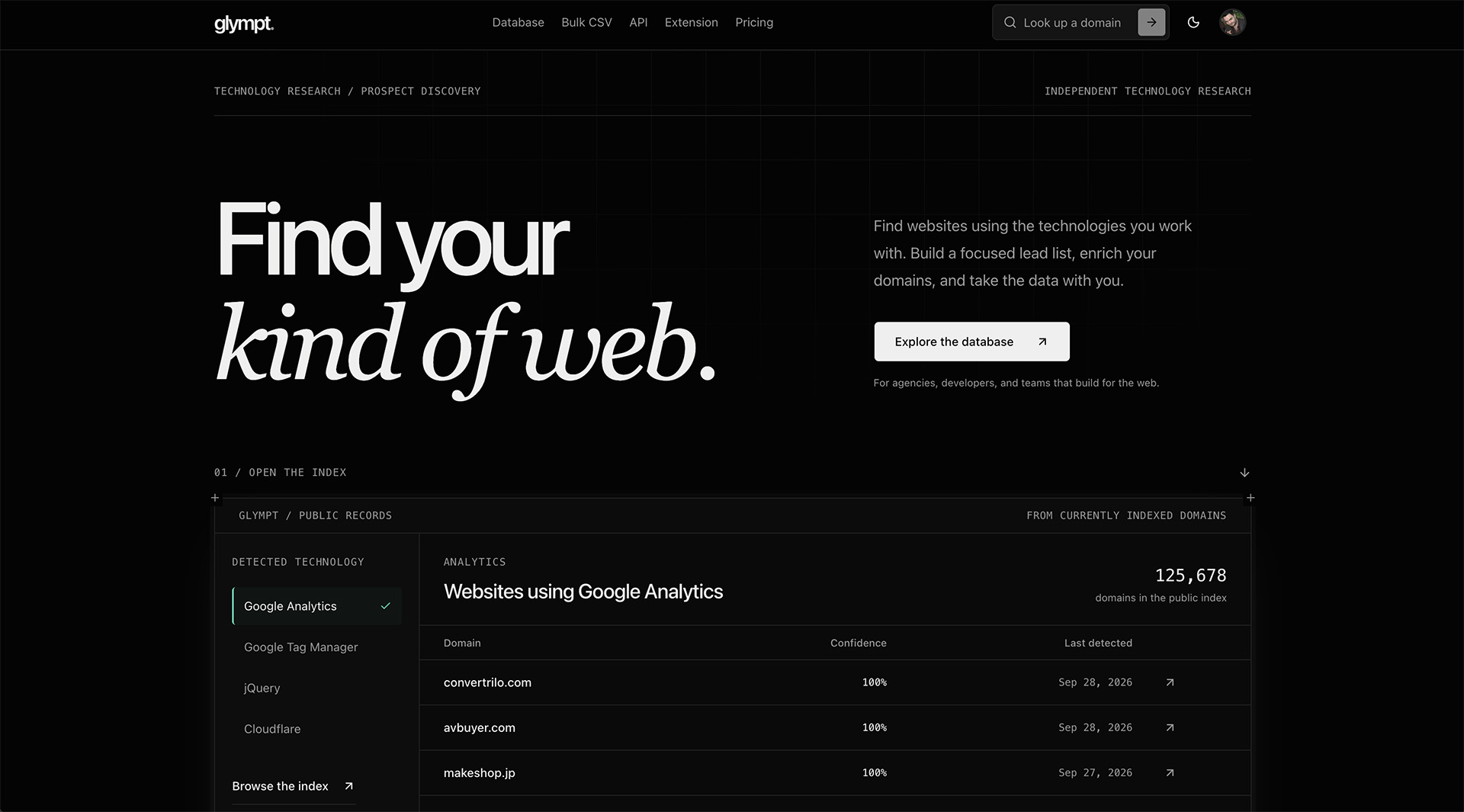
Overview
Glympt helps agencies, freelancers and small sales teams discover websites by the technologies they use. It combines individual scans, bulk domain enrichment and a shared technology database with filters, saved searches and CSV exports.
Key Features
Rust detection pipeline
Static HTTP analysis and selective Chromium rendering use Wappalyzer-compatible fingerprints, confidence scores, detection evidence and approximate geography.
Asynchronous scans
Authenticated workers support priorities, retries, heartbeats, cache-aware lookups and stale-while-revalidate behavior.
Bulk enrichment
CSV imports normalize domains and remove duplicates. Progress tracking, technology and country filters, and CSV exports connect scanning to prospecting.
Technology database
Included and excluded technologies, confidence thresholds, saved searches, reusable lists and historical changes make scan data searchable.
Workspaces and billing
Better Auth supports accounts, teams and invitations. An idempotent credit ledger, scoped API keys, plan entitlements and Stripe webhooks track workspace usage.
Tech Stack
 Next.js
 TypeScript
 Tailwind CSS
 Fastify
 PostgreSQL
 Drizzle
Architecture
View infrastructure details
Rust detection pipeline
Static HTTP analysis and selective Chromium rendering use Wappalyzer-compatible fingerprints, confidence scores, detection evidence and approximate geography.
Asynchronous scans
Authenticated workers support priorities, retries, heartbeats, cache-aware lookups and stale-while-revalidate behavior.
Bulk enrichment
CSV imports normalize domains and remove duplicates. Progress tracking, technology and country filters, and CSV exports connect scanning to prospecting.
Technology database
Included and excluded technologies, confidence thresholds, saved searches, reusable lists and historical changes make scan data searchable.
Workspaces and billing
Better Auth supports accounts, teams and invitations. An idempotent credit ledger, scoped API keys, plan entitlements and Stripe webhooks track workspace usage.
Chrome Extension
A Manifest V3 extension analyzes the active website after an explicit user action, displays detected technologies and confidence, and connects results to the user's workspace.
Search and security
Public technology, website, country and comparison pages use scan data and dynamic sitemaps. SSRF protection, DNS and redirect validation, CSV formula-injection prevention and automated tests protect the platform.
The Challenge
Individual scans are only part of a prospecting workflow. Domain lists need normalization, deduplication, asynchronous enrichment and useful exports, while results need evidence and confidence scores. The system must also handle untrusted URLs and enforce workspace access and usage limits.
The Solution
I built separately deployable frontend, API and Rust scanning workers with persistent scan history, a searchable technology database and a Chrome Extension. Workspace permissions, an auditable credit ledger and Stripe subscriptions support access and billing.
NextStarterKit
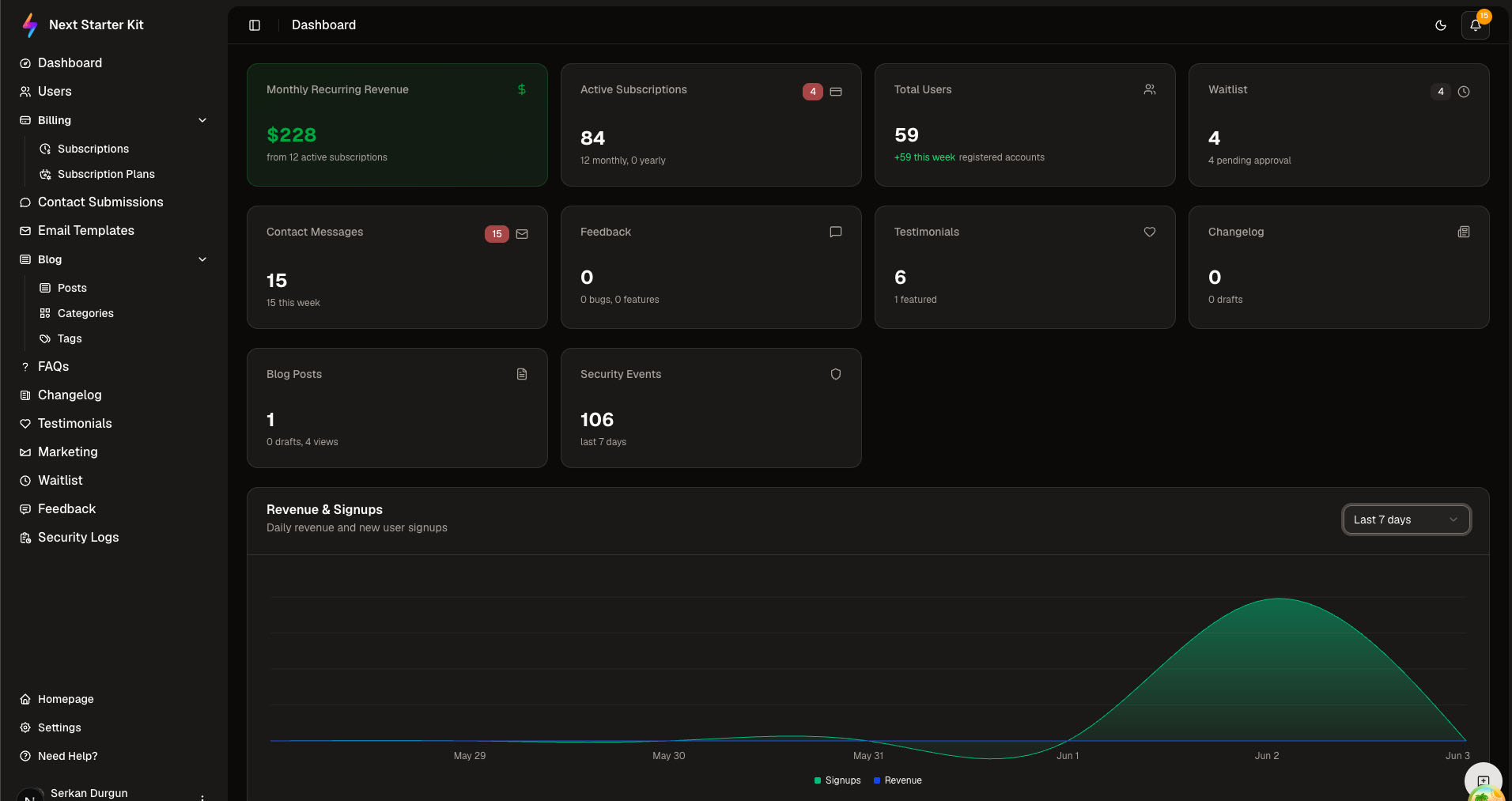
A commercial Next.js SaaS starter kit that brings authentication, billing, dashboards and content tools into a reusable product foundation.

Lofi Cafe
Six live lofi radio channels with ambient audio mixing, EQ, saved scene presets and a Pomodoro timer for a personalized focus workspace.

Convertrilo
Convertrilo is a video conversion and transcoding SaaS I built and operate end to end. It pairs Next.js, Fastify, and PostgreSQL with distributed self-hosted Rust workers and BullMQ queues to encode AV1, H.265, and H.264 efficiently on on-premise infrastructure.
Let’s build
Have a project in mind?
Let’s discuss how we can turn your idea into a real product.